
The Peacock Method – An evolving learning framework shaped by practice, research, and reflection
The Peacock Method is not a fixed programme or curriculum. It’s a working framework that has emerged from practice informed by research, refined through real-world learning, and continually evolving. Within Peacock Learning Studio, this method represents one way of thinking about learning through design, making, reflection, and identity – not a system to be followed, but a lens to think with.

How learning takes shape in the studio
Learning at Peacock Learning Studio isn’t built around fixed steps or one right way of working. Instead, it tends to emerge through real questions, making, and reflection, with ideas developing through action rather than instruction.
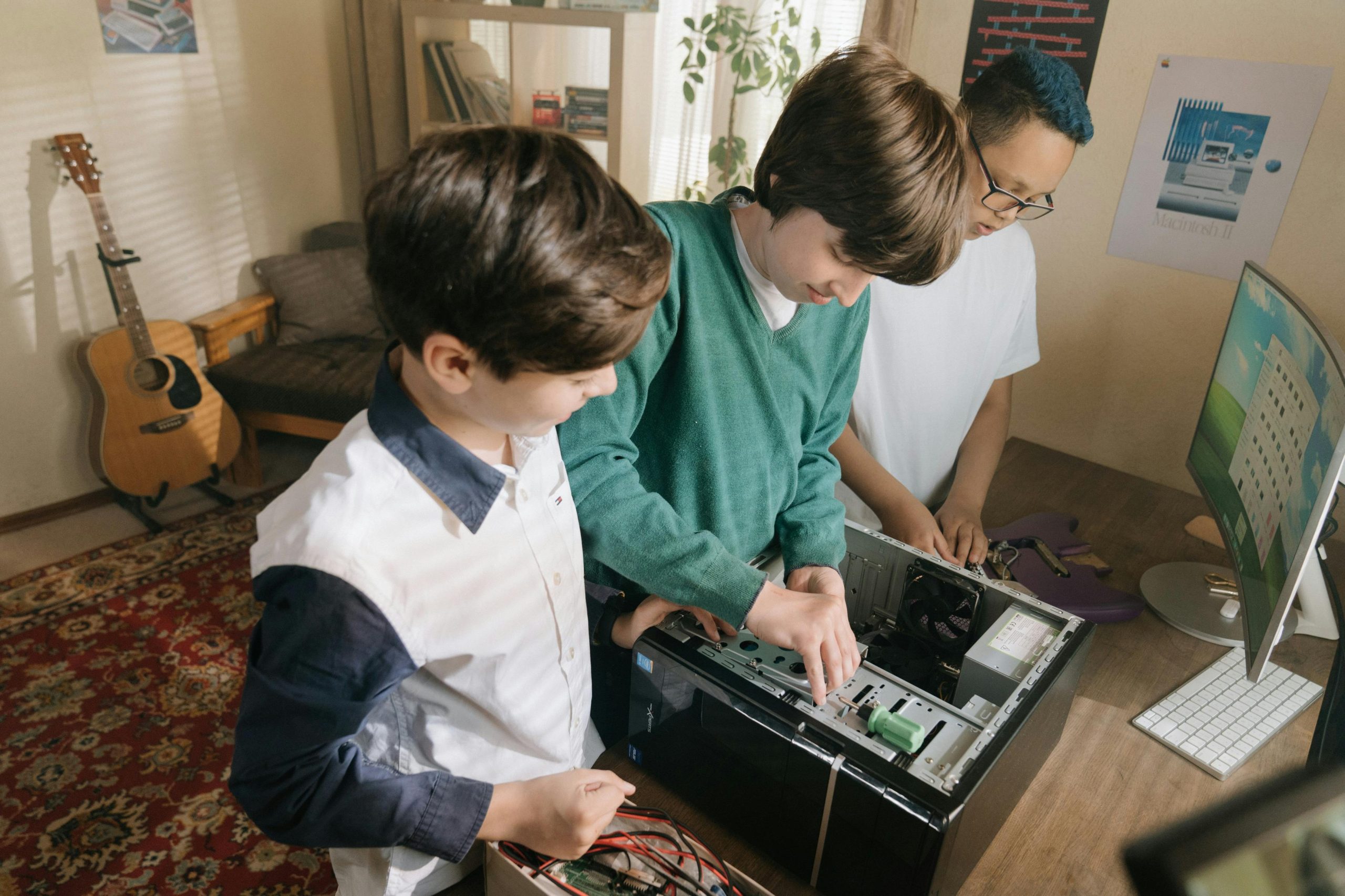
Projects often begin with a real-world context or challenge, giving learning purpose and relevance. As learners research, design, and create, thinking becomes visible through the act of making, with ideas tested, adapted, and refined along the way.
Reflection and sharing play a central role. Looking back on decisions and presenting work (finished or unfinished) helps learners build confidence, ownership, and a clearer sense of their own thinking.
Over time, we noticed these patterns repeating. The Peacock Method grew out of this studio practice, not as a rigid framework to follow, but as a way of naming and reflecting on how learning often unfolds.
Grounded in research. Designed for rebels. Built for the future.


The Peacock Method – Research Foundations Behind The Studio
Vision:
To provide an alternative to conventional, test-driven education by creating learning experiences that are curiosity-led, enterprise-minded, and grounded in the learner’s individuality.
Core Values and Research Foundations:
Self-Expression is Power
Principle: Students select their own modes of demonstrating understanding.
Evidence: Autonomy in learning enhances intrinsic motivation and persistence (Deci & Ryan, 1985; Robinson, 2011).
Curiosity Before Curriculum
Principle: Learning is initiated by real-world questions and challenges.
Evidence: Inquiry-Based Learning improves critical thinking and knowledge retention (Hmelo-Silver et al., 2007; Gruber et al., 2014).
Make it Real
Principle: Projects connect to authentic contexts, audiences, or markets.
Evidence: Authentic Learning increases engagement and real-world skill transfer (Lombardi, 2007; Condliffe et al., 2017).
Design, Test, Evolve
Principle: The learning process is iterative, promoting reflection and improvement.
Evidence: Design Thinking fosters creativity and adaptability (Razzouk & Shute, 2012; Kolb, 1984).
Own Your Learning
Principle: Students set goals, plan their approach, and self-assess progress.
Evidence: Self-regulated learning leads to higher achievement and self-efficacy (Zimmerman, 2002; Reeve, 2006).
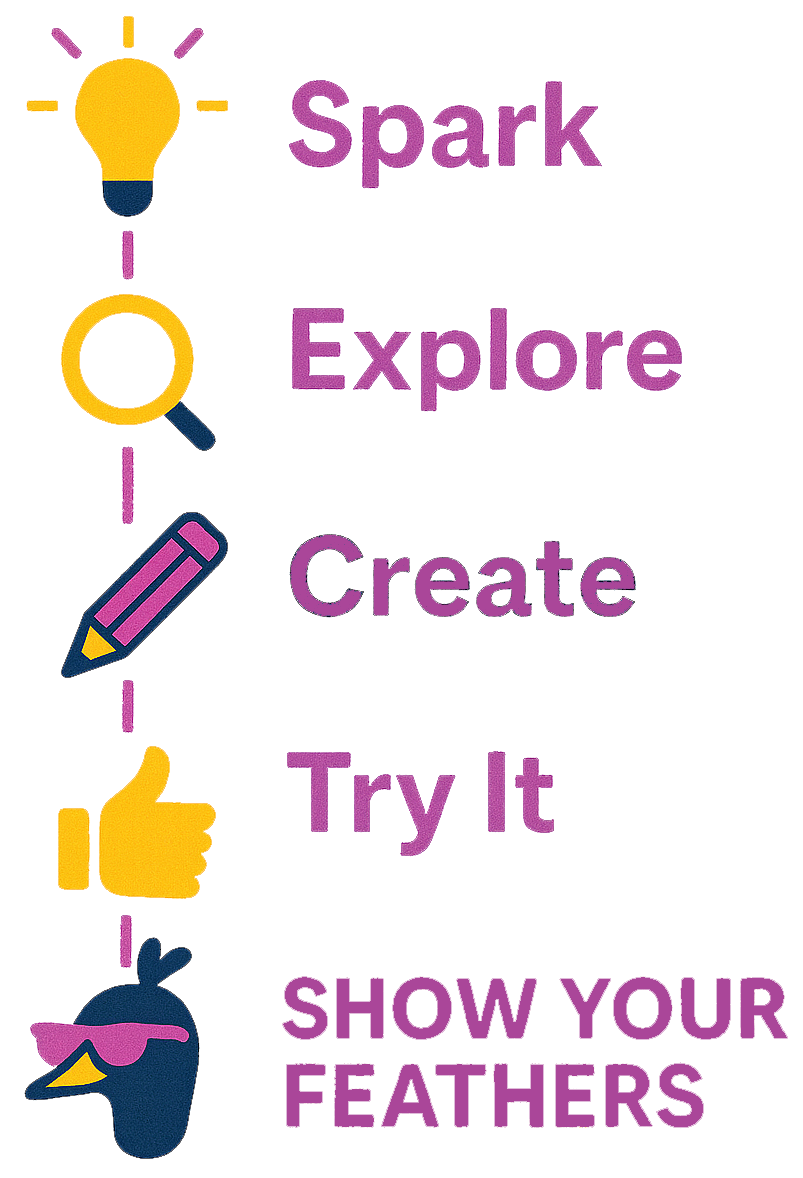
The Peacock Method Framework
This framework isn’t intended as a linear process to follow exactly. It’s a reflective tool, a way of noticing patterns that often emerge when learning is grounded in real questions, making, and sharing work.
- Spark – Engage curiosity with a question or challenge.
- Explore – Guided research and discovery.
- Create – Design or make a product/solution.
- Try it – Trial, gather feedback, adjust.
- Show Your Feathers – Present to an authentic audience.
Learning Backed by Research
If you want to learn more about some of the research that has influenced our practice, check out the reading list below.
- Deci, E. L., & Ryan, R. M. (1985). Intrinsic Motivation and Self-Determination in Human Behavior. Springer.
- Robinson, K. (2011). Out of Our Minds: Learning to be Creative. Capstone.
- Hmelo-Silver, C. E., et al. (2007). Scaffolding and Achievement in Problem-Based and Inquiry Learning. Educational Psychology Review, 19(3), 263–297.
- Gruber, M. J., et al. (2014). States of Curiosity Modulate Hippocampus-Dependent Learning. Neuron, 84(2), 486–496.
- Lombardi, M. M. (2007). Authentic Learning for the 21st Century. EDUCAUSE Learning Initiative.
- Condliffe, B., et al. (2017). Project-Based Learning: A Literature Review. MDRC.
- Razzouk, R., & Shute, V. (2012). What Is Design Thinking and Why Is It Important? Educational Research Review, 7(4), 330–348.
- Kolb, D. A. (1984). Experiential Learning: Experience as the Source of Learning and Development. Prentice-Hall.
- Zimmerman, B. J. (2002). Becoming a Self-Regulated Learner. Theory into Practice, 41(2), 64–70.
- Reeve, J. (2006). Teachers as Facilitators. Theory and Research in Education, 4(2), 145–172.

Ready to rebel?
Reach out to us to learn more or get started. Every child is different so understanding them and what will work best for them is important.